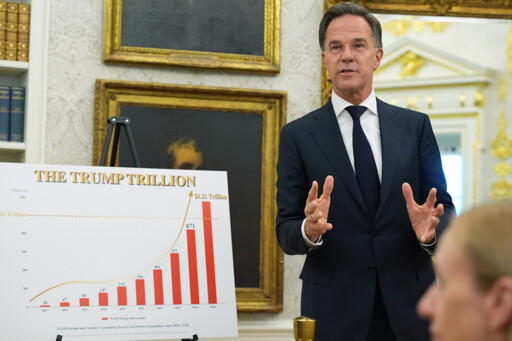
Since he started work as NATO secretary-general almost two years ago, Mark Rutte has spent much of his time trying to keep the United States anchored to the world’s biggest military alliance.
40 years is an unreasonably long timeframe to be making projections like this. Assuming the US is still having elections there will have been 10 opportunities for their government to completely flip-flop its intentions in that time.
Yes but if they don’t it will be 40 years of extra security.
I can’t really see how America been in NATO can be anything other than a good thing. They’re not great allies at the moment but that uncertainty about how America would respond is what’s keeping China from attacking Taiwan.
It’s not worth throwing all that away just so we don’t have to talk to Trump anymore.
What? The point is to take a long term view of what is successful and what is not. When you’re sitting there in retirement, what is the measure of success in your career. Success for Rutte (and Nato) is not some organizational shuffling, it’s keeping the US.
Success for Rutte (and NATO) is protecting NATO members against invasion or attack.
If the US’ membership is raising that risk for the other members rather than lowering it, then in that situation letting the US exit can be a net benefit for NATO’s members (which would no longer include the US).
I see that as the 3rd goal. First is US in. Second is Europe miltiary industrial capacity. Third is day to day functioning.
You don’t just want functioning for today. You want a long lasting and strong oganization. I know everyone’s favorite thing right now is US bad (and yes there’s plenty to work on) but no, US membership is not raising risk. No one is going to invade NATO when US industry and technology is on the other side. Again, 40 years now, long term view, big stategic picture, big industrial capacity picture, you want the US in Nato.


40 years is an unreasonably long timeframe to be making projections like this. Assuming the US is still having elections there will have been 10 opportunities for their government to completely flip-flop its intentions in that time.
Yes but if they don’t it will be 40 years of extra security.
I can’t really see how America been in NATO can be anything other than a good thing. They’re not great allies at the moment but that uncertainty about how America would respond is what’s keeping China from attacking Taiwan.
It’s not worth throwing all that away just so we don’t have to talk to Trump anymore.
What? The point is to take a long term view of what is successful and what is not. When you’re sitting there in retirement, what is the measure of success in your career. Success for Rutte (and Nato) is not some organizational shuffling, it’s keeping the US.
Success for Rutte (and NATO) is protecting NATO members against invasion or attack.
If the US’ membership is raising that risk for the other members rather than lowering it, then in that situation letting the US exit can be a net benefit for NATO’s members (which would no longer include the US).
I see that as the 3rd goal. First is US in. Second is Europe miltiary industrial capacity. Third is day to day functioning.
You don’t just want functioning for today. You want a long lasting and strong oganization. I know everyone’s favorite thing right now is US bad (and yes there’s plenty to work on) but no, US membership is not raising risk. No one is going to invade NATO when US industry and technology is on the other side. Again, 40 years now, long term view, big stategic picture, big industrial capacity picture, you want the US in Nato.