AFAIK sodium chemistry batteries are the worst for mobile applications as they’re much less energy dense meaning you’ll have a heavier pack that needs to be charged more frequently, though it is cheaper for manufacturers to produce. I recall that these work best for grid power storage where size and weight aren’t an issue.
That’s great but emerging technologies are shooting for double or triple that amount, so why switch to something thats just barely reaching the equivalent potential of what’s already old news?
What EVs don’t work in cold weather? Cheaper for the manufacturer for sure, and potentially safer though its not as if EV fires are some major epidemic.
Yeah I’d be happy with a safer battery with a bit less range if it also means it’s more consistent in said range between seasons. It’s good to know you’ll make it to X next city/charger/etc regardless of temperatures
I imagine vastly lower cost would be one reason. 450km range chargeable in 11 minutes would be enough for a significant proportion of people and likely desirable if the cost is low enough. I don’t think it’s likely that lithium would match the price/perf ratio of sodium so I think we’re likely to see a lot more sodium in applications that don’t require the absolute best energy density. So in a way, sodium might be the front runner, ahead of advanced lithium, in terms of what’s going to be adopted. 😅
E: Also we’re talking sodium batteries in production. If and when double-triple density lithium or another shows up, it might change the calculus depending on price, safety, etc.
Yup, and that’s exactly what we need for transitioning the entire grid to renewables. Mobile applications should be a marginal/convenience thing compared to actual infrastructure.
EVs are not the primary application for sodium ion batteries, I dont know why this post is trying to focus on that. The really exciting application is cheap grid-scale energy storage, making renewables even cheaper than they already are.


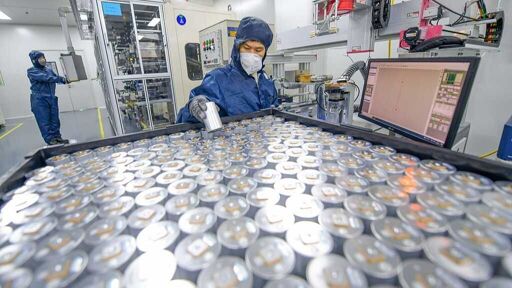
AFAIK sodium chemistry batteries are the worst for mobile applications as they’re much less energy dense meaning you’ll have a heavier pack that needs to be charged more frequently, though it is cheaper for manufacturers to produce. I recall that these work best for grid power storage where size and weight aren’t an issue.
The packs CATL makes now are 175Whr/kg which is very close to LFP. They’re already EV-worthy.
That’s great but emerging technologies are shooting for double or triple that amount, so why switch to something thats just barely reaching the equivalent potential of what’s already old news?
Because it’s safer, cheaper and works in cold weather.
What EVs don’t work in cold weather? Cheaper for the manufacturer for sure, and potentially safer though its not as if EV fires are some major epidemic.
At a significant loss, yes. When it was really cold here that was about 30-40%
I can live with that, 100miles of range is more than I use day to day, so is 60miles. Winter road trips could be a pain, but that’s maybe once a year
Yeah I’d be happy with a safer battery with a bit less range if it also means it’s more consistent in said range between seasons. It’s good to know you’ll make it to X next city/charger/etc regardless of temperatures
I imagine vastly lower cost would be one reason. 450km range chargeable in 11 minutes would be enough for a significant proportion of people and likely desirable if the cost is low enough. I don’t think it’s likely that lithium would match the price/perf ratio of sodium so I think we’re likely to see a lot more sodium in applications that don’t require the absolute best energy density. So in a way, sodium might be the front runner, ahead of advanced lithium, in terms of what’s going to be adopted. 😅
E: Also we’re talking sodium batteries in production. If and when double-triple density lithium or another shows up, it might change the calculus depending on price, safety, etc.
Exactly. Another big plus is that they don’t shit the bed when it gets cold.
Yup, and that’s exactly what we need for transitioning the entire grid to renewables. Mobile applications should be a marginal/convenience thing compared to actual infrastructure.
EVs are not the primary application for sodium ion batteries, I dont know why this post is trying to focus on that. The really exciting application is cheap grid-scale energy storage, making renewables even cheaper than they already are.
Not the worst, they are still much better than traditional lead-batteries, but worse than lithium. Cheap, low-range EVs are an option however.
Other than that, you’re right. They are much more useful for grid storage, where energy density is way less important than cost.