Japan’s transport ministry will limit the number of power banks allowed on flights and effectively ban their onboard use starting in mid-April, a move prompted by a recent series of alarming incidents.
The concern driving this ban is primarily centered around defective units already in circulation, and the acceptance that they cannot realistically be certain about their ability to prevent manufacturers in other countries from shipping in more potentially defective units. Most modern airplanes I have seen have in-seat USB charging ports, which at least cuts down on the need some, and a few hours without a charged device is not going to end the lives of anyone traveling (especially since this rule has carve outs for medical devices, I’m told).
Just use your regular charger, there are typically outlets under the seat in front of you on B737/A320 and larger. Even many regional jets have them these days. I never plug into a random USB port.
And they’re so loose that’s it’s a miracle if your charger stays in. Maybe if there were updates and changes to prevent this I would understand but as someone who’s working 99% of the time while traveling, it’s a surprise when the ports work and I rely on battery banks heavily
If you’re that worried about it (and don’t have at least a passthrough charging cable), you can just turn your devices off and bring a book. I don’t know why you’d be worried about it killing your devices though, if a plane’s electrical system has failed so badly it’s going to fry things on the USB bus then you’ve got much bigger problems.
Damaged ports with shorted pins, voltage fluctuations, etc.
The passenger electrical system is as isolated from the the rest of the plane as possible, but if the entire thing fails, sure then yeah you’re fucked and have bigger problems
A USB transceiver is required to withstand a continuous short circuit of D+ and/or D- to VBUS, GND, other data line, or the cable shield at the connector, for a minimum of 24 hours without degradation
Shorts aren’t really a concern with decent hardware, but as far as I can tell that’s the problem with the power banks that are failing - they’re not decent hardware, so minor damage attached to a very energetic bag o’ chemistry results in (very occasional) fiery disaster.
The negotiation needs to happen first - a compliant host port cannot just send 12V. Heck, even 5V at 5A depending on available power, the limit for PD, cannot just happen. A compliant USB-PD power supply is not supposed to deliver any power until an actual negotiation, or specific pull-down resistors on the device CC1/2 are detected.
Of course not all USB-C ports are compliant. USB-A is essentially a hardwired 5V at (your-guess-is-as-good-as-mine-the-spec-is-nonsense)A, and some transit systems like buses I have found and tested to just hardwire USB-C to provide 5V with no negotiation either. Maybe those had host-side resistors advertising any particular amperage (you can draw up to 3A at 5V ONLY depending on CC1/2 pull-up resistors with no further negotiation), but I wouldn’t count on it.
Also, you can’t really directly short VBUS to D+/-, since there are CC/SBU pins inbetween. On the host side, CC is either pulled up to VBUS (with a huge resistor) or tied to some IC, that might be able to detect bad conditions (though I have no experience here). On the device side, CC is either pulled-down with another big resistor, or tied to another IC. There are opportunities to detect errors and go into protection states, but that might not be the case depending on the ICs they’re using. SBU is supposed to be left floating or unconnected at the start.
As I understand it it’s been the standard since 2.0 and continues to be the case, even for high-power systems. From personal experience of trying to make a USB-C USB killer for PD, it’s also just damned difficult to do. USB is an extremely resilient standard.
Shockingly, when I travel abroad I’m usually out and about for the most days. And that’s where power bank is needed.
If can’t have them in my checked luggage and and I can’t have them in my carry on, am I expected to buy a power bank every time I fly and then throw it away?
On the topic of in-seat charging ports: your luck may vary. Even if you do find a plane which has these and they actually work, the power is not usually enough to charge more power hungry devices - bigger phones, tablets, steam deck. Don’t get me started of you actually want to use your laptop during the flight.
Yes, if you fly business there are usually power sockets which you can use, but who has money for that?
As much as it would be convenient, a plane simply does not have the electrical capacity to supply all passengers with high wattage USB outlets. Large numbers of high-capacity of lithium batteries are a solution, but are also a risk and given the recent number of fires caused by faulty Lithium battery packs, it’s unfortunate but reasonable for carriers to move to restrict them for the sake of passenger safety.


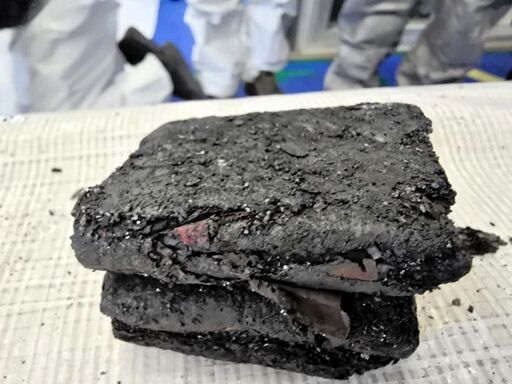
They’re doing that too:
The concern driving this ban is primarily centered around defective units already in circulation, and the acceptance that they cannot realistically be certain about their ability to prevent manufacturers in other countries from shipping in more potentially defective units. Most modern airplanes I have seen have in-seat USB charging ports, which at least cuts down on the need some, and a few hours without a charged device is not going to end the lives of anyone traveling (especially since this rule has carve outs for medical devices, I’m told).
You probably shouldn’t trust those to actually work. Or even to be safe enough to not kill whatever you plug into them.
Also you shouldn’t plug your phone into random USB ports, although i guess carrying a charge pass through adapter is an option.
Just use your regular charger, there are typically outlets under the seat in front of you on B737/A320 and larger. Even many regional jets have them these days. I never plug into a random USB port.
And they’re so loose that’s it’s a miracle if your charger stays in. Maybe if there were updates and changes to prevent this I would understand but as someone who’s working 99% of the time while traveling, it’s a surprise when the ports work and I rely on battery banks heavily
shit you’re lucky to get paid wifi on a crj, let alone an outlet.
If you’re that worried about it (and don’t have at least a passthrough charging cable), you can just turn your devices off and bring a book. I don’t know why you’d be worried about it killing your devices though, if a plane’s electrical system has failed so badly it’s going to fry things on the USB bus then you’ve got much bigger problems.
Damaged ports with shorted pins, voltage fluctuations, etc.
The passenger electrical system is as isolated from the the rest of the plane as possible, but if the entire thing fails, sure then yeah you’re fucked and have bigger problems
Shorts aren’t really a concern with decent hardware, but as far as I can tell that’s the problem with the power banks that are failing - they’re not decent hardware, so minor damage attached to a very energetic bag o’ chemistry results in (very occasional) fiery disaster.
Is that for USB A and USB C? USB PD could be riskier if it shorts VBUS to D+ or D- since it can negotiate up to 12 volts, IIRC
The negotiation needs to happen first - a compliant host port cannot just send 12V. Heck, even 5V at 5A depending on available power, the limit for PD, cannot just happen. A compliant USB-PD power supply is not supposed to deliver any power until an actual negotiation, or specific pull-down resistors on the device CC1/2 are detected.
Of course not all USB-C ports are compliant. USB-A is essentially a hardwired 5V at (your-guess-is-as-good-as-mine-the-spec-is-nonsense)A, and some transit systems like buses I have found and tested to just hardwire USB-C to provide 5V with no negotiation either. Maybe those had host-side resistors advertising any particular amperage (you can draw up to 3A at 5V ONLY depending on CC1/2 pull-up resistors with no further negotiation), but I wouldn’t count on it.
Also, you can’t really directly short VBUS to D+/-, since there are CC/SBU pins inbetween. On the host side, CC is either pulled up to VBUS (with a huge resistor) or tied to some IC, that might be able to detect bad conditions (though I have no experience here). On the device side, CC is either pulled-down with another big resistor, or tied to another IC. There are opportunities to detect errors and go into protection states, but that might not be the case depending on the ICs they’re using. SBU is supposed to be left floating or unconnected at the start.
As I understand it it’s been the standard since 2.0 and continues to be the case, even for high-power systems. From personal experience of trying to make a USB-C USB killer for PD, it’s also just damned difficult to do. USB is an extremely resilient standard.
Yeah, aircrafts are famous for being unsafe and allowing high voltage connectors exposed to passangers.
Shockingly, when I travel abroad I’m usually out and about for the most days. And that’s where power bank is needed.
If can’t have them in my checked luggage and and I can’t have them in my carry on, am I expected to buy a power bank every time I fly and then throw it away?
On the topic of in-seat charging ports: your luck may vary. Even if you do find a plane which has these and they actually work, the power is not usually enough to charge more power hungry devices - bigger phones, tablets, steam deck. Don’t get me started of you actually want to use your laptop during the flight.
Yes, if you fly business there are usually power sockets which you can use, but who has money for that?
As much as it would be convenient, a plane simply does not have the electrical capacity to supply all passengers with high wattage USB outlets. Large numbers of high-capacity of lithium batteries are a solution, but are also a risk and given the recent number of fires caused by faulty Lithium battery packs, it’s unfortunate but reasonable for carriers to move to restrict them for the sake of passenger safety.