

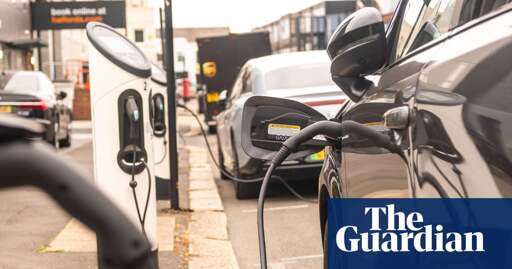
While most hybrids are said to use one to two litres of fuel per 100km, a study claims they need six litres on average
Plug-in hybrid electric cars (PHEVs) use much more fuel on the road than officially stated by their manufacturers, a large-scale analysis of about a million vehicles of this type has shown.
The Fraunhofer Institute carried out what is thought to be the most comprehensive study of its kind to date, using the data transmitted wirelessly by PHEVs from a variety of manufacturers while they were on the road.
. . .
According to the study, the vehicles require on average six litres per 100km, or about 300%, more fuel to run than previously cited.
The scientists of the Fraunhofer Institute found that the main reason for the higher-than-stated fuel usage was due precisely to the fact that the PHEVs use two different modes, the electric engine and the combustion engine, switching between both. Until now it has been claimed by manufacturers that the vehicles used only a little or almost no fuel when in the electric mode. The studies showed that this was not in fact the case.
This mirrors my experience with my 2017 Prius Prime. On the rare occasion when I activate gas mode (e.g., for long trips) it gets 50 mpg no problem. Otherwise it’s an electric car and the gas engine is completely shut down.
During COVID lockdowns, we were driving a lot less. We got a warning message that we needed to burn at least 5 gallons of gas each year to keep it from going stale. So we drove it exclusively in gas mode for a while, then went right back to not caring about gas prices at all.
The Prius PHEV basically turns into a regular Prius once the battery is empty because Toyota designed it for low consumption. Others like Volkswagen just needed PHEVs for tax reasons, so the actual consumption does not matter to them.
That’s not correct, but proves my point, people have no idea how these cars work.
A Prius uses an electric motor to assist the gas motor, the primary drive is the gas engine. Kinetic energy is recovered and stored as electrical potential.
PHEVs are EVs with a gas generator on board. The gas motor only charges the battery.
PHEVs do indeed typically have the output of their engines connected to the wheels through the drive train. You’ve described a range extender. Vehicles with a range extender do not have the gas engine connected to the drive train directly.
Unfortunately „most people“ in this case includes you, but not me. But we can change that 😉
The major differences between the Prius HEV and PHEV are that the battery has a larger capacity and that it can be charged externally.
The transmission works exactly the same and on both models the gas engine can be used to provide traction to the wheels without converting everything to electrical energy first.
It also has (at least) two electric motors - again, both HEV and PHEV.
Look up Hybrid Synergy Drive on Wikipedia. There are also some good explanations on YouTube. It’s at the same time a quite simple, yet very smart design. I find it fascinating what the Toyota engineers have come up with.