If you like screen or tmux, you might like a tiling window manager like i3 or sway, or GNOME with paperwm extension. It can have real advantages for older folks (like me) which don’t have perfect vision any more, because it is much more conservative with screen space. After a few days learning, it becomes also really fast to switch windows and desktops. This is not black-or-white: The desktop WMs do have keyboard shortcuts and windows layouts which mimick tiling WMs, and tiling WMs may have a few desktop features. The former are a bit more convenient and easy for beginners, while the latter are blazingly fast.
- 12 Posts
- 23 Comments
Joined 1 month ago
Cake day: April 4th, 2025
You are not logged in. If you use a Fediverse account that is able to follow users, you can follow this user.

Dezentral, weniger Angriffsfläche, wesentlich weniger lukrativ abzugreifen und der Artzthelferin bei meinem HNO Arzt vertraue ich 1000 mal mehr als zukünftigen CDU oder AfD Gesundheitsministern…
Der erste Warnschuss war, dass das britische NHS seine ganzen Daten mit Google geteilt hat. Natürlich “anonymisiert” (HAHAHAHAHA) und bloß zu Forschungszwecken…
Eine Ökosteuer, die als Klimageld wieder an jede/n Einzelnen ausgeschüttet wird, ist einerseits ein Anreiz zum Ressourcen sparen, der weder Durchschnittsbürger noch sozial Schwächere belastet, weil diese weit weniger Ressourcen verbrauchen als die ganz Reichen. Von daher schützt es nicht nur das Klima, sondern ist auch gerecht.
Mehr Klimaschutz löst nicht alle Probleme der Welt - das zu denken wäre tatsächlich naiv, aber wer behauptet das ?- , aber wenn man intelligente Lösungen nutzt, mehrere sehr dringende und wichtige.
Nicht zuletzt bedeutet verstärkter Klimaschutz und Reduktion fossiler Atmosphärengifte, dass genau den Kräften, die in den USA und vielen anderen Ländern in Zusammenarbeit mit Rechtsextremisten daran arbeiten, Umweltschutz zurückzudrehen und die Denokratie zu zerstören, Geld und damit Macht entzogen wird. Und der Erhalt der Demokratie ist Schlüssel für die Lösung weiterer Probleme.
Hier noch zum taktisch geschürten Doomerismus, Interviews und Artikel von Michael Mann:
Es geht aber eben mehr um kollektives Verhalten und kollektive Entscheidungen. Und da ist was die Politik angeht sehr viel Luft nach oben. Eine Mehrheit in Deutschland befürwortet z.B. ein Tempolimit auf Autobahnen und eine grosse Mehrheit befürwortet einen besseren, flächendeckenden ÖPNV.
Ich sehe das ähnlich wie das Problem der Cholera: Das war nur zu lösen durch koordinierte kollektive Aktion, wie saubere Trinkwasserversorgung und geordnete Kanalidation. Und nachdem sich zeigte, dass es nicht anders geht, wurde das auch umgesetzt.
Und zum Pessimismus: Der kann im Einzelnen sicher sehr real sein - wird aber nachweislich auch durch Stimmungsmache der fossilem Industrie mit unwissenschaftlichen Argumenten gefördert.
Diese hohe Wirkung der Vorstellung, wie man von anderen gesehen wird, wird übrigens auch in der Werbung massiv genutzt. So zeigt etwa Werbung für Bier typischerweise fröhliche Gruppen junger Leute in schöner Natur, etwa am einem See. Dies signalisiert: Trinkst Du X, wirst Du als cool und gesellig gesehen!
Werbung für Zigaretten und für Automobile zeigt dagegen sehr oft Männer und einsame, weite offene Landschaften mit sehr viel Horizont. Die Botschaften:
- Die Einsamkeit appelliert natürlich zunächst an den inneren Cowboy, der selbstbestimmt und unabhängig lebt - unvorstellbar, dass das Verhalten eines solchen Mannsbild in Wirklichkeit von einer Droge bestimmt wird wie Pavlows Hund von der Glocke.
- Da ist so viel Luft und Weite, wie soll da eine einzelne Zigarette, ein einzelner Auspuff was verschmutzen oder gar schaden?
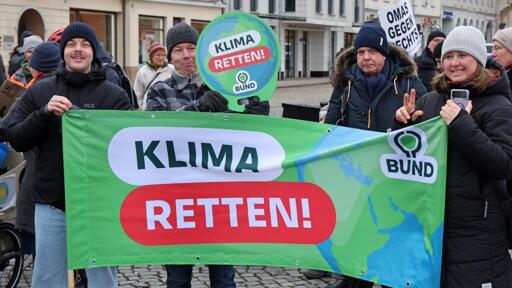
Eine sehr interessante Feststellung. Sie lässt mich schnurstracks an die Situation in den USA vor dem amerikanischen Bürgerkrieg denken, als es um die Abschaffung der Sklaverei ging und die Südstaaten bzw die machthabenden Eliten der damaligen Südstaaten einerseits ökonomisch völlig abhängig von der Sklaverei als Institution gemacht hatte, aber andererseits auch noch ihre gesamte Gesellschaft auf einer Ideologie aufgebaut hatte, dass Sklaverei rechtens sei.
Heute sehen wir scheinbar nicht nur ideologisch -ökonomische Umbrüche von ähnlicher Tragweite, sondern der Symbolismus der Konföderierten wird von Trump noch aktiv beschworen. Es geht heute um die fossile Industrie als Geld und Macht vermittelnde Institution. Die Erneuerbaren Energiequellen, Wärmepumpen, Elektroautos, Abbau des Autoverkehrs im Städten, oder allgemein Decarbonisierung lassen diese Geld- und Machtquellen gerade schmelzen.
Was dazu führt dass die alte Macht in etlichen Ecken der Welt gerade versucht, die Demokratie auszuschalten - mit Methoden des Faschismus.
In my experience, dealing with repeated nvidia problems is not worth the hassle. Just replace it with a good AMD graphics card and sell that nvidia thing.
For me, this result is also not too surprising:
-
If allowing / using Undefined Behavior (UB) would allow for systematically better optimizations, Rust programs would be systematically slower than C or C++ programs, since Rust does not allow UB. But this is not the case. Rather, sometimes Rust programs are faster, and sometimes C/CC++ programs. A good example is the Debian Benchmark Game Comparison.
-
Now, one could argue that in the cases where C/C++ programs turned out to be faster than Rust programs, that at least im these cases exploiting UB gave an advantage. But, if you examine these programs im the Debian benchmark game (or in other places), this is not the case either. They do not rely on clever compiler optimizations based on assumptioms around UB. Instead, they make heavy use of compiler and SIMD intrinsics, manual vectorization, inline assembly, manual loop unrolling, and in general micro-managing what the CPU does. In fact, these implementations are long and complex and not at all idiomatic C/C++ code.
-
Thirdly, one could say that while these benchmark examples are not idiomatic C code, one at times needs that specific capability to fall back to things like inline assembly, and that this is a characteristic capability of C snd C++.
Well, Rust supports inline assembly as well, though it is rarely used.
-
You can legally buy second-market OEM licenses. They are not that expensive, and do not expire. And, older versions of Windows are much slimmer and boot much faster, though it is not a good idea to connect them to the Internet - instead, one would block connections between VM and Internet. Which is anyway much better from a privacy perspective.
Another big plus of that approach: If your laptop or PC breaks, you can just move the VM image with Windows exactly like any other file you have backed up (you do backups, don’t you?) to the new hardware and use it as before. This esoecially breaks the problem of forced OS upgrades if the new hardware does not support the old windows version, or you do not have the installer and license keys any more, but the new Windows version does not support your old documents, media formats, or pheriperals like scanners.
Also, if you modify your Windows install and it might break, you can just make a snapshot of the VM image - which is a copy of a file - and restore it when needed.
A few more thoughts here:
- for a first Distribution, Ubuntu is fine, too. Also, you could ask people arounf you what they know best und whether they like to help you. For example, Debian is a bit harder to install but is rock solid once it runs.
- if you are concerned about security, you should practice a strict separation between trusted software installed by you, and untrusted data presented to you via web, mail or Internet. Never run untrusted code. Windows blurs that line and this is fatal.
- In respect to hardware support: Most standard PC hardware will work very well with Linux, even old scanners that have no more Windows driver support. NVidia is the bad exception, and the bad rap is still justified because of Wayland, the new graphics display server. If you are not really poor you might consider to buy something better. The hardware support landscape is different for laptops. Here, refurbished Lenovo Thinkpad or Dell laptops are first choice, and also best value for the money.
Es ist eigentlich nicht richtig, verschiedene städtische Verkehrsmittel nach zurückgelegten Kilometern zu bewerten, denn Menschen haben nach gesichertem Ergebnis der Verlehrsforschung ein Wegezeitbudget.
Das heisst, wer ein “schnelleres” Verkehrsmittel nutzt, wird ganz automatisch weitere Wege zurück legen, die mittlere tägliche Zeit für Wege wird nach einer Anpassungsphase mehr oder weniger im Mittel dieselbe sein.
Und umgekehrt: Wer Fahrrad statt Auto fährt, verbringt deswegen im Mittel nicht mehr Zeit zum Pendeln. Statt dessen organisiert er oder sie kürzere Wege. Wer damit experimentiert, kann das gut an sich selber beobachten, denn der Zusammenhang wirkt sowohl kollektiv als auch individuell.
Die ernüchternde Erkenntnis hieraus: Das Auto spart keine Zeit.
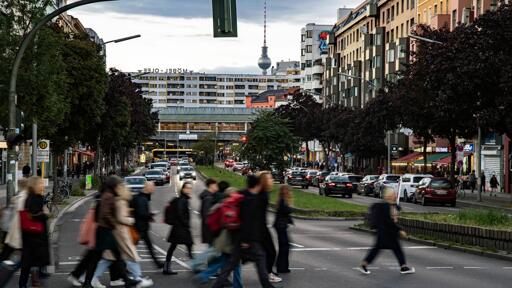
Ich finde den Artikel ganz schön tendenziös:
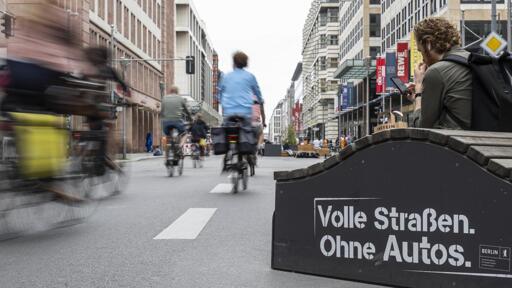
Zumindest, was den Autoverkehr angeht, soll es in den Nebenstraßen in den nächsten Jahren still werden. Durchgangsverkehr ist mit diesen Plänen kaum noch möglich und wer in diesem Kiez wohnt und ein Auto oder ein Gewerbe hat, hat schlechte Karten beziehungsweise muss Kreise und Kringel drehen, um von A nach B zu kommen.
Nicht jeder ist von den Ideen begeistert, die längst beschlossen wurden. [ … ] Dass es ebenfalls Probleme für Lieferverkehr, Handwerker und Rettungskräfte geben könnte - geben wird -, ist eines ihrer Gegenargumente.
Was ja Bullshit ist, weil Paris ja zeigt dass Rettungskräfte auf leereren Strassen ja sogar schneller zum Ziel kommen. Und natürlich gibt es Ausnahmegenehmigungen für Lieferverkehr
Während für die einen der Traum vom Leben im Grünen mitten in der Stadt, von Vogelgezwitscher und Kindern, die vorm Haus spielen, wahr wird, überlegen Ältere, wie sie ihre Einkäufe organisieren.
Weil ohne Auto können Menschen sich nicht mal kurze Distanzen fortbewegen ?
Und das Vogelgezwitscher soll den Leuten vorbehalten bleiben die sich ein Haus im Speckgürtel leisten können - das aber nicht selten mit Einsamkeit bezahlen, denn Vorstädte sind recht einsam?
80 Prozent der Bewohner des Kiezes seien jung und hätten gar kein Auto. Die meisten Wege würden zu Fuß zurückgelegt und eine Mehrheit würde die Maßnahmen befürworten.
Wo ist hier das Problem mit einer Mehrheitsentscheidung?
Fragt man ältere Nachbarn, fühlen die sich in ihrer Mobilität durch die Pläne eingeschränkt. Der Besuch bei den Enkeln in Brandenburg oder der Wocheneinkauf ist für sie ohne Auto undenkbar.
In der Stadt mit vermutlich dem besten und dichtesten ÖPNV-Netz in Deutschland?
Und was machen die Älteren, wenn sie nicht mehr sicher Auto fahren können? Gerade für Ältere ist ein besserer ÖPNV notwendig und ein Abbau des Verkehrs sicherer - und nicht jede/r der oder die in Rente geht, kann sich Kosten von z.B. 400 Euro im Monat für ein Auto leisten.
Denn eine verkehrsberuhigte Innenstadt könne auch zu Verdrängung führen. “Ursprünglich als Maßnahmen zur Verbesserung der Lebensqualität gedacht, steigern ökologischen Aufwertungen oft die Attraktivität eines Stadtteils, wodurch Mieten und Immobilienpreise steigen.”
Bizarr, sich gegen eine höhere Lebensqualität zu wenden…
Die oebb.at Webseite (wo man alle DB Fahrkarten normal buchen kann) oder für den schmaleren Groschen Flixbus sind doch auch Optionen. Oebb hat sogar öfter mal sehr günstige Liegewagentickets…
Ich habe meine Bahncard seit 25 Jahren, das ging immer per Lastschrift - jetzt aber nicht mehr, die “Verifizierung” per Verimi wird verlangt.
Das mache ich nicht, weil ich keine Möglichkeit habe, den tatsächlichen Umfang des Kontozugriffs zu überprüfen oder zu beschränken.
Kreditkarte geht auch nicht …
Paypal gehört einem gewissen Peter Thiel falls dir der Name was sagt. Mit dessen Firmen mach ich keine Geschäfte.
Obwohl es eine altbackene 1-Cent Überweisung ja auch tun würde, von mir aus könnte ich den Cent noch mit Bahncardnummer zurück überweisen.
Na dann halt nicht da buche ich halt unkompliziert Bahncard-Flexpreis bei https://oebb.at/, ist sowieso die bei weitem freundlichere und unkompliziertere Webseite.
Am Automaten gibt es noch Flexpreis, für Bahncard aber angeblich begrenzt (was bei der Oebb Webseite erstaunlicherweise nie ein Problem ist).
Oder wenn’s billiger sein soll halt Flixbus.
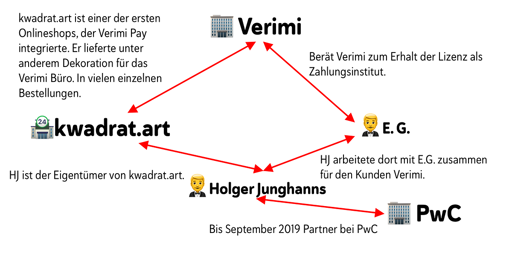
Verimi ist derDienstleister, den zwingend Kunden der Deutschen Bahn akzeptieren müssen, wenn sie “Supersparpreis” Ermäßigungsangebote der Deutschen Bahn kaufen wollen - diese gibt es nur noch online oder per App.
Verimi hat dabei das erkläre Ziel, die Identitäten der Kunden zu einer einzigen digitalen Identität zusammenzuführen - im Prinzip also so was wie ein Personalausweis fürs Web. Dies aber ist nicht von der GDPR gedeckt, das fusionieren von Kundendaten zum Zweck von Tracking benötigt die freiwillige ausdrückliche Zustimmung des Nutzers bzw Kunden.
Ich denke, Yanis Varoufakis schreibt hier eine in sich sehr logische und schlüssige Darstellung, was Trumps Motivationen, Überlegungen und Ziele sein könnten. Wobei ich denke, dass zumindest eine Teilabsicht auch ist, die EU zu spalten.
Ich denke auch dass es richtig ist, dass Trump einflussreiche Unterstützer hat unter den extrem reichen Amerikanern.
Aber ein stark autoritäres Element ist da auf jeden Fall dabei und die EU hat bisher recht gut Geschlossenheit bewahrt.
Ich halte es auch für möglich, dass sich Allianzen bilden aufgrund von Interessen, die Trump nicht einbezieht. Sicher ist China eine Art Systemkonkurrent zur EU. Aber beide Blöcke haben, beispielsweise, auch ein vitales Eigeninteresse an Maßnahmen gegen die Klimakrise - die EU weil zunehmend die Mittelmeer-Anrainerstaaten, und neuerdings auch Südosteuropa durch Extremwetter geschädigt werden und dies auch immer schneller zu einem wirtschaftlichen Faktor wird. Und die Tendenz gibt es auch in China, wobei noch hinzukommt dass Städte wie Bejing inzwischen auch real von gefährlichen Hitzewellen betroffen sind. Die chinesische Regierung könnte zu dem Schluss kommen, dass dies mittelfristig eine größere Bedrohung für die Stabilität ist als die Demokratie in der EU.
Ähnlich sind auch Allianzen zwischen anderen Südostasiatischen Staaten und der EU möglich.

Vielleicht gibt’s da auch Leute, die mal gucken wie es sich im Land ihrer Vorfahren leben würde. Da es in Europa ja auch immer noch Staatsbürgerschaften nach Abstammungsprinzip gibt und jede Menge sehr qualifizierte Leute von ideologisch getriebenen Entlassungen und Abbau von Bürgerrechten betroffen sind, ist es durchaus denkbar, dass es in Zukunft US-Bürger gibt, die sich entschließen mal hier rüberzumachen.