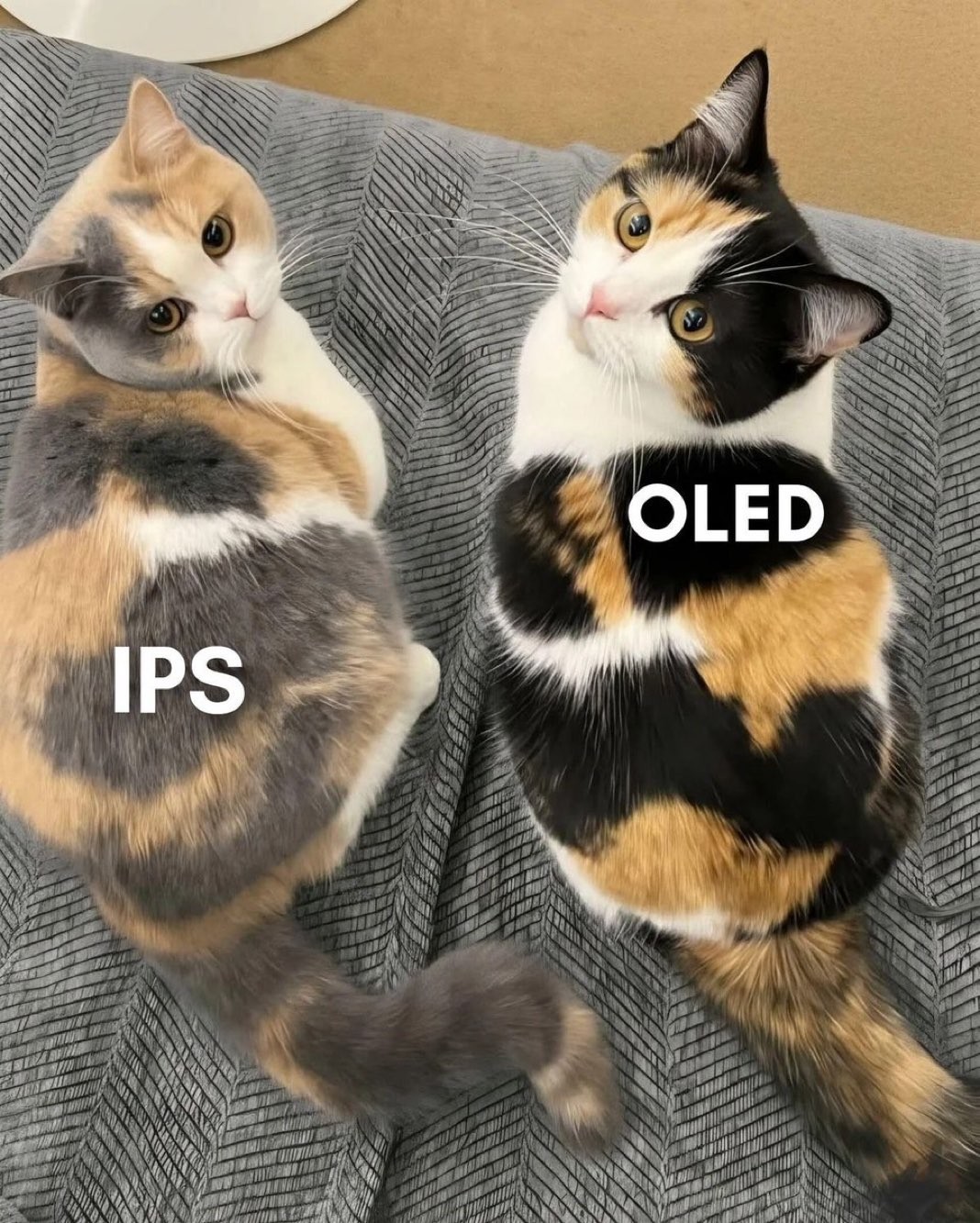
Sir. Haxalot@nord.pub to cats@lemmy.worldEnglish · 2 months agoDisplay technology, demonstrated by catcdn.nord.pubimagemessage-square73fedilinkarrow-up1990arrow-down111
arrow-up1979arrow-down1imageDisplay technology, demonstrated by catcdn.nord.pubSir. Haxalot@nord.pub to cats@lemmy.worldEnglish · 2 months agomessage-square73fedilink
minus-square1984@lemmy.todaylinkfedilinkarrow-up3·2 months agoAren’t oled screens still very bad for people with sensitive eyes due to pulse width modulation?
minus-squarefuckwit_mcbumcrumble@lemmy.dbzer0.comlinkfedilinkarrow-up7·2 months agoBasically all IPS displays use pwm as well. Good panels use higher frequencies so they’re harder to notice. But it’s not the rule.
minus-squarenao@sh.itjust.workslinkfedilinkarrow-up1·2 months agoIf that’s the case the frequencies are so high they are undetectable by conventional methods? Plenty of displays get tested as not using pwm.
minus-square1984@lemmy.todaylinkfedilinkarrow-up1·2 months agoNot sure about that. On notebookcheck they test for pwm and about half of laptop screens have it, last time I checked. But I remember that most of the test winners had it.


Aren’t oled screens still very bad for people with sensitive eyes due to pulse width modulation?
Basically all IPS displays use pwm as well. Good panels use higher frequencies so they’re harder to notice. But it’s not the rule.
If that’s the case the frequencies are so high they are undetectable by conventional methods? Plenty of displays get tested as not using pwm.
Not sure about that. On notebookcheck they test for pwm and about half of laptop screens have it, last time I checked. But I remember that most of the test winners had it.