I’m not a native Enolish speaker, but usually Iconsider my skills to be passable. But headlines just throw me off completely sometimes. it just doesn’t follow the same rules.
Headlines have their own, unique grammar rules in English. They elide a lot of words to save space.
In general, the semi-colon joins two distinct clauses that could each stand alone as sentences, but it implies more of a relationship between them than a period would. In this headline the implication is that they have not finalized the deal despite good progress because of the President’s hesitation. In contrast, colons join two clauses with the explicit meaning that one clause introduces, or elaborates on, the other. Here, headlinespeak kind of abuses that usage to show that the ideas expressed in the first clause are explained as originating from Vance. It’s much more common to put the name of the person first, like, “Vance: Iran and US…”
So, the headline is saying that according to statements by JD Vance, Iran and the US have made good progress on a deal, but [REDACTED] hasn’t approved it yet.
JD Vance tells reporters that the US and Iran have made ‘a lot of progress’ towards a ceasefire extension, however, Trump is ‘not yet ready’ to approve said ceasefire extension
Basically the “: Vance” at the end is showing that the reporters are quoting JD when they say ‘a lot of progress’ and ‘not yet ready’


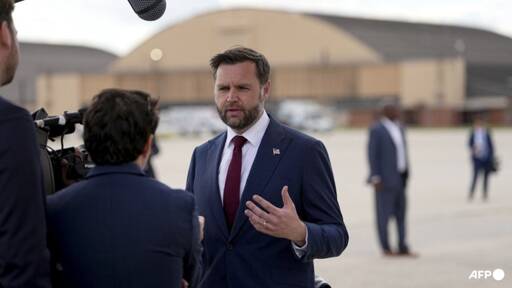
Can someone decipher that headline for me, pls?
I’m not a native Enolish speaker, but usually Iconsider my skills to be passable. But headlines just throw me off completely sometimes. it just doesn’t follow the same rules.
Headlines have their own, unique grammar rules in English. They elide a lot of words to save space.
In general, the semi-colon joins two distinct clauses that could each stand alone as sentences, but it implies more of a relationship between them than a period would. In this headline the implication is that they have not finalized the deal despite good progress because of the President’s hesitation. In contrast, colons join two clauses with the explicit meaning that one clause introduces, or elaborates on, the other. Here, headlinespeak kind of abuses that usage to show that the ideas expressed in the first clause are explained as originating from Vance. It’s much more common to put the name of the person first, like, “Vance: Iran and US…”
So, the headline is saying that according to statements by JD Vance, Iran and the US have made good progress on a deal, but [REDACTED] hasn’t approved it yet.
JD Vance tells reporters that the US and Iran have made ‘a lot of progress’ towards a ceasefire extension, however, Trump is ‘not yet ready’ to approve said ceasefire extension
Basically the “: Vance” at the end is showing that the reporters are quoting JD when they say ‘a lot of progress’ and ‘not yet ready’
I hope that helps clear it up a bit