

Former Israeli prime minister Ariel Sharon, when asked to explain the apparent about-face that led him to advocate the unilateral withdrawal from the Gaza Strip, quoted a beloved Israeli pop ballad. “What you can see from there, you can’t see from here,” he said, referring to the shift in perspective he had supposedly undergone since coming to power.
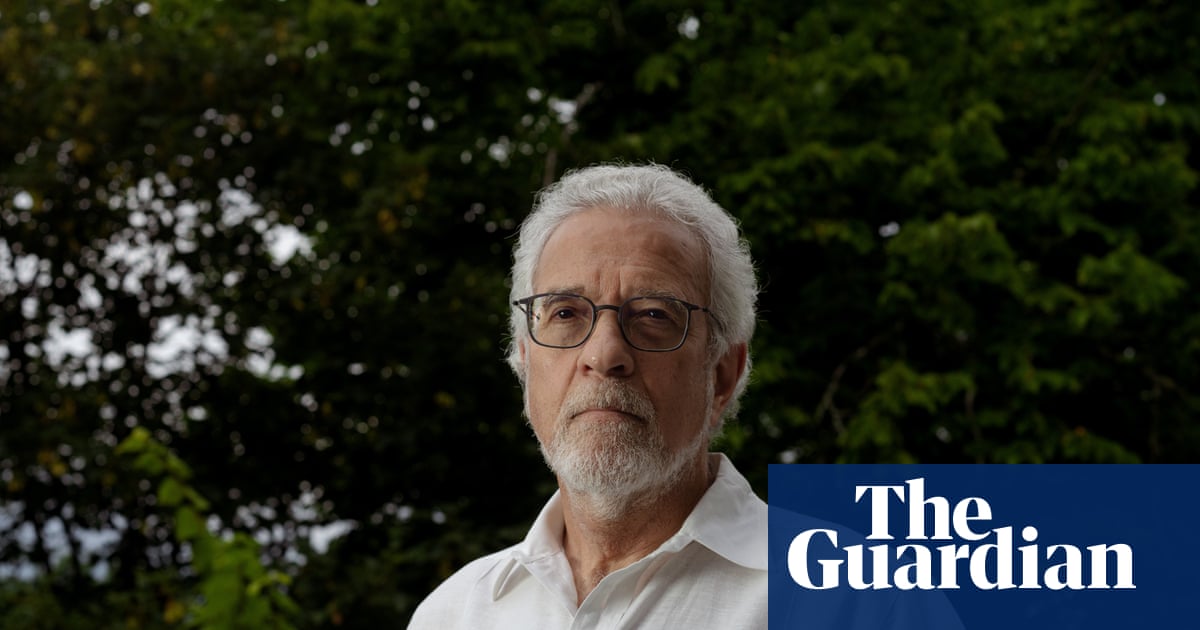
Israeli-born Holocaust historian Omer Bartov invoked the same line when he was asked how he had come to view Israel’s ferocious assault on Gaza as a genocide. Living in the US, where he has spent more than three decades, he said, had given him the necessary distance to see the annihilation of Gaza for what it was. “I think it’s very hard to be dispassionate when you’re there,” he said.
Bartov did more than simply apply the word genocide to Israel’s actions: he shouted it from the establishment-media rooftops, making the case in a lengthy July 2025 essay in the New York Times titled: I’m a Genocide Scholar. I Know It When I See It. (He had addressed some of the arguments in a Guardian essay the year prior.) Bartov’s declaration cost him several close relationships, he told me, even though subsequent events have not only validated his analysis but further demonstrated the lack of concern for Palestinian suffering that has become prevalent in Israeli society.
His new book, Israel: What Went Wrong?, is an attempt to explain that indifference. The book, which was published on Tuesday, is a detailed account of how Israel was transformed from a hopeful nation that in its founding document promised “complete equality of social and political rights to all its citizens irrespective of religion, race or sex” into one intent on what he bluntly terms “settler colonialism and ethno-nationalism”.
1917 In November (October on the Julian calendar), the Bolsheviks seize power and Russia makes preparations to withdraw from the war. That same month, Britain issues the Balfour Declaration. In December, the British Army led by General Allenby marches victoriously into Jerusalem. Palestine is placed under British military occupation (1917–20). It then had a population of 688,957 Arabs (including Christians, Muslims and other non-Jewish minorities) and a population of 58,728 Jews.
1922 The Council of the League of Nations agrees to the text of the British Mandate of Palestine. The Palestine Order-in-Council of 1 September separates Palestine from the Emirate of Transjordan, which is established to the east of the River Jordan. The Colonial Secretary, Winston Churchill, in a statement on British policy rejects the claim that Palestine was to become ‘as Jewish as England is English’. He declares: ‘His Majesty’s Government regard any such expectation as impracticable and have no such aim in view.’ He adds that: ‘the status of all citizens of Palestine in the eye of the law shall be Palestinian, and it has never been intended that they, or any section of them, should possess any other juridical status. In an exchange of correspondence with the Palestine Arab delegation, Churchill recognizes ‘the people of Palestine’, specifically referring to Palestine’s Arab community.
1948 Civil war breaks out on a wider scale in Palestine. In March, the US concludes that partition is unworkable and reverses its policy. It declares itself in favor of a UN Trusteeship for Palestine in a single unitary state. A UN Trusteeship Agreement is subsequently drafted. The Jewish Agency condemns it, goes on the offensive and avows to proclaim a Hebrew Republic on 16 May. In April, the Haganah (Jewish paramilitary), implements the Plan Dalet. Thirteen military operations follow, eight of which are beyond the boundaries set out for the Arab state in the UN Partition Plan. On 11 April, a massacre is perpetrated by the Irgun with the support of the Haganah in the Palestinian Arab village of Deir Yassin, near Jerusalem. By May, the Zionists have conquered Jaffa (which was supposed to be part of the Arab state as envisaged in the UN Partition Plan) and Haifa, causing their Arab populations to flee to secure ground. At midnight on 14/15 May the last British High Commissioner in Palestine terminates the Mandate and departs Haifa. The Yishuv concomitantly proclaims the establishment of the state of Israel. By this time, over 350,000 Palestinian Arabs have been evicted from their homes. The Arab Legion, commanded by British officers, enters Palestine on the pretext that it is defending the population of Palestine from further attacks by the Haganah and the Irgun (Zionist paramilitary). It is supported by troops from Lebanon, Syria, Egypt and Iraq. The fighting escalates. In July, the Haganah captures Lydda, Ramle and Nazareth expelling its Arab populations. By the time hostilities come to an end some 750,000 Palestinian Arabs and 17,000 Jews are displaced by the fighting. In December, the UN General Assembly passes a resolution providing that: ‘the refugees wishing to return to their homes and live at peace with their neighbors should be permitted to do so at the earliest practicable date, and that compensation should be paid for the property of those choosing not to return and for loss of or damage to property which, under principles of international law or in equity, should be made good by the Governments or authorities responsible.