

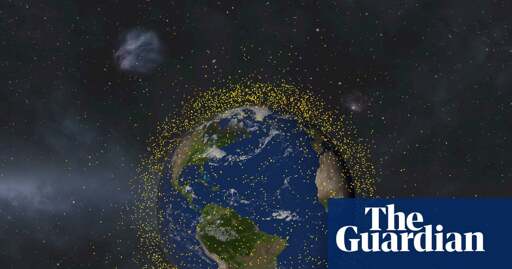
In the 21st century, private companies began to launch satellites at unprecedented rates. Today, Earth’s orbit is packed with thousands of satellites and fragments – around 32,000 in total – all circling the planet at immense speed. This is even after accounting for the fact that a lot of satellites have fallen out of orbit and been destroyed.
Some reports suggest that by the end of this decade there could more than 60,000 active satellites in space. Launch by launch, what began with a handful of scientific and military spacecraft has accelerated into a constant flow of objects, publicly and privately owned, placed into different orbital lanes, each serving a variety of purposes.
There is now a diverse collection of satellites spinning around the globe, including communication and weather satellites, navigation satellites and Earth observation technology that takes images of the surface.
The surge in orbital activity has created a significant collision risk. There have already been crashes, including a 2009 event where a US satellite hit a defunct Russia military satellite. Tens of thousands of tiny fragments of metal are now spinning at high velocities.
The big fear is that future collisions will cause a domino effect where Earth’s orbit becomes cluttered with tiny, high-speed bits of metal. That could create a near-impenetrable layer of debris that would make space launches so dangerous it would essentially trap humans on Earth.
Starlink is a front - it is actually designed to induce Kessler syndrome so that Musk can try to sell a solution.