of brexit, absolutely. it was insane. and of course you need to export stuff to keep your economy going. but the basic idea that countries should be self-reliant so that the entire market is more robust is good. they were just blinded by imperialism.
Edit: i want to hear alternative perspectives on this, because it seems i’m in a minority here and i’ve always taken it as self-evident. so if anyone feels like it, please explain.
I think the problem is that Brexit was never about becoming ‘self-reliant’. As you said, Brexit cut the UK off from their single biggest export market, which is the exact opposite of what you need to do if you want to build up your industry. These days no country is completely self-reliant, and trying to be so, while it sounds good, just ends up meaning that you generalise, becoming mediocre at everything and exceptional at nothing.
If the Brexiteers truly wanted to make Britain great again they should have chosen a domain to be great in and lobbied for investment in it. Britain was already punching well above its weight in financial services, they could have invested further in that, for example, and become a true world leader… but only from within the single market, where they had unrestricted access to the talent and economies of the EU.
okay fair, brexit as presented was always a lie and their numbers were not only wrong, but about things that didn’t actually affect anyone. but i’ve talked to people in england who are still pro. not because of what was promised, but because what they saw was an opportunity to get stuff made locally again. and i get that.
maybe it’s a background thing. i grew up surrounded by old shuttered industry that used to make genuinely useful stuff only to be out-priced by imports, and that has continued into the 2020’s. i used to live close to the world’s most advanced paper mill of its type, but it closed and production was moved to a worse mill with lower output in another country as an economic decision. that place had been there for 200 years, the company owned its own hydro power dam and all the forests used for the pulp, the mill had its own rail connection… it was basically printing money, but dismantling it meant being able to sell the machinery for a quick buck.
like, sweden is exceptional at iron and steel. but we used to be exceptional at a lot more. turbines and jet engines. high-voltage transformers. copper. grains. cheap but safe cars. textiles. power tools. wood products. all very useful stuff that could be made entirely “in-house”. now most of that (or the constituent parts) is made elsewhere, and almost purely for economic reasons. there was no need to close that paper mill, but it was done to get the numbers to look good. when the economy goes international it feels like the people get left behind.
the way i see it is, if you black-box a country to just look at imports and exports, the lower the ratio between the two the more money the country makes. yes the salary and living situation may differ from place to place but that’s all internal, funded by those exports in some way or another. moving towards that is, in my mind, a laudable goal. and doing so in a free trade union is obviously better.
the problem is of course that it was never the goal of brexit.
Yeah, globalisation has caused lots of problems, working class people have suffered even as the wealthy have flourished. But there’s no going back. A small nation like Britain couldn’t be completely self-sufficient without essentially regressing to a lower technology level, at which point they would just get invaded by somebody with an advanced military.
Instead we need to look at other ways of righting those wrongs, new strategies to ensure that the people can live happy and healthy lives. Lots of people want UBI, and I can see the attraction. I think it’s worth a try, even if it doesn’t work as advertised we could get feedback and adjust things until we find something that does work. The status quo is just not tenable.
yeah lowering the standard of living is not popular. i don’t think complete self-sufficiency is necessarily the goal i’m thinking of, as much as minimising logistics costs. there’s also the resiliency factor; every european nation being self-sufficient in crucial areas like food, medicine, electricity etc and trading the surplus would make for a very strong continent.
there’s a lot of talk here about buying local now, like i’d imagine there is in most of europe. we still have local farms, but buying meat from brazil of all places is still marginally cheaper because they produce so much and have more lax standards for, say, how much antibiotics can be used on the animals (here that makes the meat prohibited to sell). i’m not saying to artificially modify pricing to privilege local production but i feel like there must be… something.
i think the finns did a ubi experiment pretty recently. the execution was a bit flawed, but the results were positive.
Countries should be relatively self-reliant, as should cities, as should individual homes. It’s good to have a little garden if you can, and to be able to make bread from scratch if the supermarket is out of loaves.
But, too much self-reliance is a miserable way to live. Try living on a subsistence farm, and see how much work that is. And even then, you’re not really self-reliant. You’re probably buying refined diesel for your tractor, a tractor you bought from a tractor manufacturer, and so on. On the other hand if a farmer specializes in just one crop, say wheat, they’re no longer self-sufficient, but they’re probably more efficient, and they use the money they get from selling wheat to buy corn, tomatoes, and carrots from other specialists.
Not relying on other people has a major cost. It’s much less efficient, and much more work. In the modern world, it’s next to impossible. Even the Amish regularly buy and sell with the “English” world.
It’s the same for countries. You can grow wine in England, and I’m sure some of it is good. But, it doesn’t have the climate that France or Spain do. Instead of every country producing its own wine and only consuming domestic wine, why not get higher quality wine from the countries best at making it, and export to them the things you’re best at producing.
Sometimes, relying on other countries can lead to problems. When it works it’s cheaper and more efficient, but when it fails it can be bad. For example, Germany relied too much on cheap Russian gas. So, when Russia invaded Ukraine, Germany couldn’t fully boycott Russia and had to keep paying them for gas until it could totally rework its energy infrastructure. Otherwise Germans would freeze in the winter.
But, Brexit was about leaving the EU. The EU isn’t just a bunch of random trade partners. Russia is in Europe, but was never part of the EU. There’s a reason why. Being part of the EU was supposed to also be a commitment to a common set of values: freedom, democracy, equality, human rights, etc. Not every country fully agreed with every other country’s interpretation of values. But, that’s ok, even within a country there were pretty major differences between people. Britain was part of the EU community, not merely a trade partner with EU countries.
Being part of the EU allowed the UK to have access to oranges at the lowest possible cost. They had to rely on Spain to grow those oranges, but Spain and England share many of the same interests and values, so that should have been fine. In exchange, they could sell things to Spain that Spain didn’t produce locally, like whiskey.
With Brexit, England still can’t grow oranges locally, and still has to import them from Spain. Spain still doesn’t make much whiskey locally, and has to import it from England, but now there are barriers. Oranges are a true unique advantage that Spain has. Almost no other country in Spain can grow them as well. For the UK, their specialty wasn’t as special. Sure, they have a lot of history with whisky, but pre-Brexit a lot of the specialization was finance, accounting, legal services, consulting, etc. That kind of expertise is easy to transfer to another country. It doesn’t require a special climate, just trained people. So, when Brexit happened and trade barriers went up, it was easy for a company in France to switch to a financial services company out of Switzerland instead, and it was easy for financial services experts in London to just pick up and move (often move back) to the EU.
No country in the modern world is fully self-reliant, even North Korea trades with China. So, the real question is how self-reliant to be. Most people thought that the UK had it good. As one of the founding members of the EU it had managed to negotiate a few exceptions that were in its own interest. The British specialties of financial services, banking, insurance, accounting, consultancy, etc. were big revenue generators both from taxing the companies and from taxing the well paid white collar employees. The UK had a comparative advantage there not because of geography or climate, but just because of momentum. Companies were based out of London, and there was no reason to move, so that’s where they stayed. But, as time goes on, it’s likely that the slight friction between the UK and EU will mean that there will be a gradual migration out of London and over to Zurich, or Berlin or Paris.
Finally, since the UK and EU values and culture are so similar, even though the UK can make its own laws on all kinds of things now, they are still largely following the EU laws. The UK is free to change its food labelling laws to be more similar to the US, for example. But, UK people still want laws more similar to Europe than the US. One example of this is female sanitary products (tampons, etc.). One change the UK made after Brexit was to eliminate the VAT on those. But, this isn’t because the UK cares more about women’s needs than the EU, and this required an extreme decision like Brexit. A push towards a zero rate is happening in many EU countries, it’s just going a bit slower.
In the end, the UK has maybe gained a little more self reliance by leaving a community of like-minded countries. But, the result is a big hit to its economy. It now has the ability to change its laws and regulations to reflect British values instead of European values. But, for the most part, nothing much has changed because for the most part British values and European values are pretty similar. It still has to import oranges from Spain, there’s now just more paperwork. There are always tradeoffs. Often if the domestic manufacturing for something is small (say wine in the UK) it’s because another country has a comparative advantage. You can shore up UK wine-making, but if you do that you’re probably going to make wine more expensive for consumers, and probably make it lower quality as well. The EU is a community of like-minded countries that share interests and values, and has a lot of countries with pretty similar levels of economic development. Despite the rhetoric, Britons weren’t losing their jobs because of foreign labour. Brexit didn’t result in a big drop in the unemployment rate. It was already near historic lows. Basically, in the end, there was no need for Brexit, no advantage in Brexit, and a lot of costs once it was done.
i think the main point i’m disagreeing with people on is where to draw the line on self-reliance. it may be naive of me but i’m for a “put on your own mask before helping others” approach where countries trade for what they cannot make. a country is not a single subsistence farmer, it’s a huge collection of people.
That’s the North Korea model. I don’t think people in North Korea enjoy life much.
“Countries trade for what they’re not specialized at” is the South Korean model. They import almost everything, and export high-end electronics, cargo ships, cars, etc.
I would rather live in South Korea, don’t know about you.


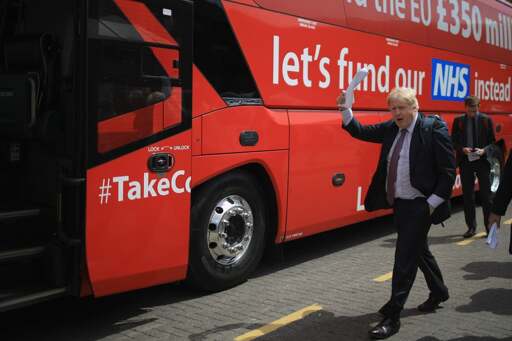
In no way was it a fine idea. The very concept was bound to fail. Isolationism destroys trade.
of brexit, absolutely. it was insane. and of course you need to export stuff to keep your economy going. but the basic idea that countries should be self-reliant so that the entire market is more robust is good. they were just blinded by imperialism.
Edit: i want to hear alternative perspectives on this, because it seems i’m in a minority here and i’ve always taken it as self-evident. so if anyone feels like it, please explain.
I think the problem is that Brexit was never about becoming ‘self-reliant’. As you said, Brexit cut the UK off from their single biggest export market, which is the exact opposite of what you need to do if you want to build up your industry. These days no country is completely self-reliant, and trying to be so, while it sounds good, just ends up meaning that you generalise, becoming mediocre at everything and exceptional at nothing.
If the Brexiteers truly wanted to make Britain great again they should have chosen a domain to be great in and lobbied for investment in it. Britain was already punching well above its weight in financial services, they could have invested further in that, for example, and become a true world leader… but only from within the single market, where they had unrestricted access to the talent and economies of the EU.
okay fair, brexit as presented was always a lie and their numbers were not only wrong, but about things that didn’t actually affect anyone. but i’ve talked to people in england who are still pro. not because of what was promised, but because what they saw was an opportunity to get stuff made locally again. and i get that.
maybe it’s a background thing. i grew up surrounded by old shuttered industry that used to make genuinely useful stuff only to be out-priced by imports, and that has continued into the 2020’s. i used to live close to the world’s most advanced paper mill of its type, but it closed and production was moved to a worse mill with lower output in another country as an economic decision. that place had been there for 200 years, the company owned its own hydro power dam and all the forests used for the pulp, the mill had its own rail connection… it was basically printing money, but dismantling it meant being able to sell the machinery for a quick buck.
like, sweden is exceptional at iron and steel. but we used to be exceptional at a lot more. turbines and jet engines. high-voltage transformers. copper. grains. cheap but safe cars. textiles. power tools. wood products. all very useful stuff that could be made entirely “in-house”. now most of that (or the constituent parts) is made elsewhere, and almost purely for economic reasons. there was no need to close that paper mill, but it was done to get the numbers to look good. when the economy goes international it feels like the people get left behind.
the way i see it is, if you black-box a country to just look at imports and exports, the lower the ratio between the two the more money the country makes. yes the salary and living situation may differ from place to place but that’s all internal, funded by those exports in some way or another. moving towards that is, in my mind, a laudable goal. and doing so in a free trade union is obviously better.
the problem is of course that it was never the goal of brexit.
Yeah, globalisation has caused lots of problems, working class people have suffered even as the wealthy have flourished. But there’s no going back. A small nation like Britain couldn’t be completely self-sufficient without essentially regressing to a lower technology level, at which point they would just get invaded by somebody with an advanced military.
Instead we need to look at other ways of righting those wrongs, new strategies to ensure that the people can live happy and healthy lives. Lots of people want UBI, and I can see the attraction. I think it’s worth a try, even if it doesn’t work as advertised we could get feedback and adjust things until we find something that does work. The status quo is just not tenable.
yeah lowering the standard of living is not popular. i don’t think complete self-sufficiency is necessarily the goal i’m thinking of, as much as minimising logistics costs. there’s also the resiliency factor; every european nation being self-sufficient in crucial areas like food, medicine, electricity etc and trading the surplus would make for a very strong continent.
there’s a lot of talk here about buying local now, like i’d imagine there is in most of europe. we still have local farms, but buying meat from brazil of all places is still marginally cheaper because they produce so much and have more lax standards for, say, how much antibiotics can be used on the animals (here that makes the meat prohibited to sell). i’m not saying to artificially modify pricing to privilege local production but i feel like there must be… something.
i think the finns did a ubi experiment pretty recently. the execution was a bit flawed, but the results were positive.
Countries should be relatively self-reliant, as should cities, as should individual homes. It’s good to have a little garden if you can, and to be able to make bread from scratch if the supermarket is out of loaves.
But, too much self-reliance is a miserable way to live. Try living on a subsistence farm, and see how much work that is. And even then, you’re not really self-reliant. You’re probably buying refined diesel for your tractor, a tractor you bought from a tractor manufacturer, and so on. On the other hand if a farmer specializes in just one crop, say wheat, they’re no longer self-sufficient, but they’re probably more efficient, and they use the money they get from selling wheat to buy corn, tomatoes, and carrots from other specialists.
Not relying on other people has a major cost. It’s much less efficient, and much more work. In the modern world, it’s next to impossible. Even the Amish regularly buy and sell with the “English” world.
It’s the same for countries. You can grow wine in England, and I’m sure some of it is good. But, it doesn’t have the climate that France or Spain do. Instead of every country producing its own wine and only consuming domestic wine, why not get higher quality wine from the countries best at making it, and export to them the things you’re best at producing.
Sometimes, relying on other countries can lead to problems. When it works it’s cheaper and more efficient, but when it fails it can be bad. For example, Germany relied too much on cheap Russian gas. So, when Russia invaded Ukraine, Germany couldn’t fully boycott Russia and had to keep paying them for gas until it could totally rework its energy infrastructure. Otherwise Germans would freeze in the winter.
But, Brexit was about leaving the EU. The EU isn’t just a bunch of random trade partners. Russia is in Europe, but was never part of the EU. There’s a reason why. Being part of the EU was supposed to also be a commitment to a common set of values: freedom, democracy, equality, human rights, etc. Not every country fully agreed with every other country’s interpretation of values. But, that’s ok, even within a country there were pretty major differences between people. Britain was part of the EU community, not merely a trade partner with EU countries.
Being part of the EU allowed the UK to have access to oranges at the lowest possible cost. They had to rely on Spain to grow those oranges, but Spain and England share many of the same interests and values, so that should have been fine. In exchange, they could sell things to Spain that Spain didn’t produce locally, like whiskey.
With Brexit, England still can’t grow oranges locally, and still has to import them from Spain. Spain still doesn’t make much whiskey locally, and has to import it from England, but now there are barriers. Oranges are a true unique advantage that Spain has. Almost no other country in Spain can grow them as well. For the UK, their specialty wasn’t as special. Sure, they have a lot of history with whisky, but pre-Brexit a lot of the specialization was finance, accounting, legal services, consulting, etc. That kind of expertise is easy to transfer to another country. It doesn’t require a special climate, just trained people. So, when Brexit happened and trade barriers went up, it was easy for a company in France to switch to a financial services company out of Switzerland instead, and it was easy for financial services experts in London to just pick up and move (often move back) to the EU.
No country in the modern world is fully self-reliant, even North Korea trades with China. So, the real question is how self-reliant to be. Most people thought that the UK had it good. As one of the founding members of the EU it had managed to negotiate a few exceptions that were in its own interest. The British specialties of financial services, banking, insurance, accounting, consultancy, etc. were big revenue generators both from taxing the companies and from taxing the well paid white collar employees. The UK had a comparative advantage there not because of geography or climate, but just because of momentum. Companies were based out of London, and there was no reason to move, so that’s where they stayed. But, as time goes on, it’s likely that the slight friction between the UK and EU will mean that there will be a gradual migration out of London and over to Zurich, or Berlin or Paris.
Finally, since the UK and EU values and culture are so similar, even though the UK can make its own laws on all kinds of things now, they are still largely following the EU laws. The UK is free to change its food labelling laws to be more similar to the US, for example. But, UK people still want laws more similar to Europe than the US. One example of this is female sanitary products (tampons, etc.). One change the UK made after Brexit was to eliminate the VAT on those. But, this isn’t because the UK cares more about women’s needs than the EU, and this required an extreme decision like Brexit. A push towards a zero rate is happening in many EU countries, it’s just going a bit slower.
In the end, the UK has maybe gained a little more self reliance by leaving a community of like-minded countries. But, the result is a big hit to its economy. It now has the ability to change its laws and regulations to reflect British values instead of European values. But, for the most part, nothing much has changed because for the most part British values and European values are pretty similar. It still has to import oranges from Spain, there’s now just more paperwork. There are always tradeoffs. Often if the domestic manufacturing for something is small (say wine in the UK) it’s because another country has a comparative advantage. You can shore up UK wine-making, but if you do that you’re probably going to make wine more expensive for consumers, and probably make it lower quality as well. The EU is a community of like-minded countries that share interests and values, and has a lot of countries with pretty similar levels of economic development. Despite the rhetoric, Britons weren’t losing their jobs because of foreign labour. Brexit didn’t result in a big drop in the unemployment rate. It was already near historic lows. Basically, in the end, there was no need for Brexit, no advantage in Brexit, and a lot of costs once it was done.
good answer.
i think the main point i’m disagreeing with people on is where to draw the line on self-reliance. it may be naive of me but i’m for a “put on your own mask before helping others” approach where countries trade for what they cannot make. a country is not a single subsistence farmer, it’s a huge collection of people.
That’s the North Korea model. I don’t think people in North Korea enjoy life much.
“Countries trade for what they’re not specialized at” is the South Korean model. They import almost everything, and export high-end electronics, cargo ships, cars, etc.
I would rather live in South Korea, don’t know about you.
i think technically “juche” is the north korean model, which specifically lists what industries are allowed and not. doesn’t seem like a good idea.