

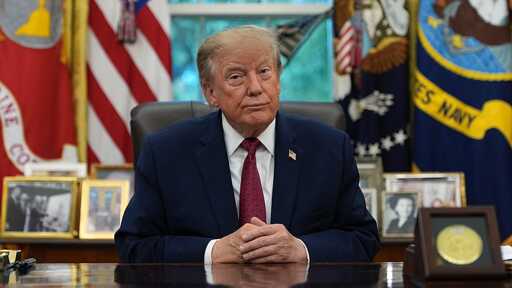
European leaders push back against Washington’s proposal for a broader security framework, warning that Moscow cannot dictate the continent’s future as US-led peace negotiations over Ukraine prepare to resume in Abu Dhabi.
European leaders push back against Washington’s proposal for a broader security framework, warning that Moscow cannot dictate the continent’s future as US-led peace negotiations over Ukraine prepare to resume in Abu Dhabi.
The EU has a lot of money and resources that can be taken over (mostly by the US, Russia might get a deal to keep eastern Europe neutral).
A huge advantage the EU had was that they had good relations with all three superpowers. They had Russian fuel, Chinese components, the protection of the US military, and access to the markets of all three. That was an insanely lucrative position to be in. Now, the EU no longer has access to Russian or Gulf fuel, and must buy much more expensive fuel from the US. (A deal with Canada could help here.) It has started a trade war with China, one in which ‘the cards are made in China’. And now it has to either accept an unequal treaty with the US (less bad in the short run), or break relations with the last of the superpowers (probably the less bad choice in the long run).
Another problem is the loss of the (neo)colonies. Many European countries had political control, or at least economic influence, over countries in Asia and Africa. But this weakens as those countries develop, and with China expanding their relations through the Belt and Road initiative, these countries can now play off the EU / IMF against China to get better deals, or even switch to Chinese loans (very useful if China is already their biggest trading partner).
As for the US and Russia, yes they are also weakening, but they started off higher so they have longer to fall before they lose the superpower status. They also have the two biggest nuclear arsenals on the planet (~1700 deployed warheads each), more than six times the size of third-placed France (~300).